
4.9 Identifying Predatory Conferences
Predatory practices aren’t limited to journals. Predatory conferences are also on the rise, exploiting researchers’ desire to present their work and network with colleagues. These conferences often employ similar deceptive tactics to those used by predatory journals.
So how can you identify and avoid predatory conferences?
Watch the video below to learn more about identifying predatory conference organisers.
Video Transcript (click to expand)
In a recent report (which we contributed to) the International Academy Partnership – IAP – gave the following classification for predatory publishers:
“Features of predatory journals include rapid pay-to-publish models without rigorous peer-review, fake editorial boards falsely listing respected scientists, fraudulent impact factors, journal titles that are deceptively similar to those of legitimate journals, paid review articles that promote fake science, and aggressive spam invitations to submit articles, including outside of a researcher’s expertise”.
However – predatory conferences also exist (and often partner with the predatory publishers or cover both sectors themselves).
Identifying features include a lack of peer review of submitted abstracts, high fees, false claims to partners and plenaries, and inviting researchers to speak on topics outside their area of expertise. Sometimes conferences do not even take place – but no refunds are given.
These predators are motivated by profit rather than scholarship, soliciting research through actions that exploit the pressure on researchers to publish and present their work to their peers.
And before you say – “this is a small problem, it won’t happen to me!!” – new research by scholars has suggested that the number of predatory conferences publicised each year actually outweighs the real conferences taking place!
Moreover, the IAP estimates that every single year, over 1.2 million researchers succumb to predatory practices, resulting in the wastage of billions of dollars of research budgets.
But why are predatory practices growing so rapidly?
There are generally believed to be 4 key factors driving this development:
- Increasing commercialisation of the scholarly communications ecosystems
- Rise of quantity-over-quality researcher KPIs, and an institutional obsession with ranking systems (the publish or perish paradigm)
- Continued lack of awareness and limited understanding of predatory practises amongst many researcher demographics
- That conferences are increasingly seen as a publishing opportunity, because researcher’s universities increasingly only offer conference funding where publication is included. This, coupled with covid and the growing trend towards hybrid and virtual conferences has fuelled an exponential growth in predatory conferences.
If you would like to learn more about identifying predatory conferences, consider enrolling in our free course Selecting the Right Conference, part of the three-course How to be a Success at an Academic Conference programme.
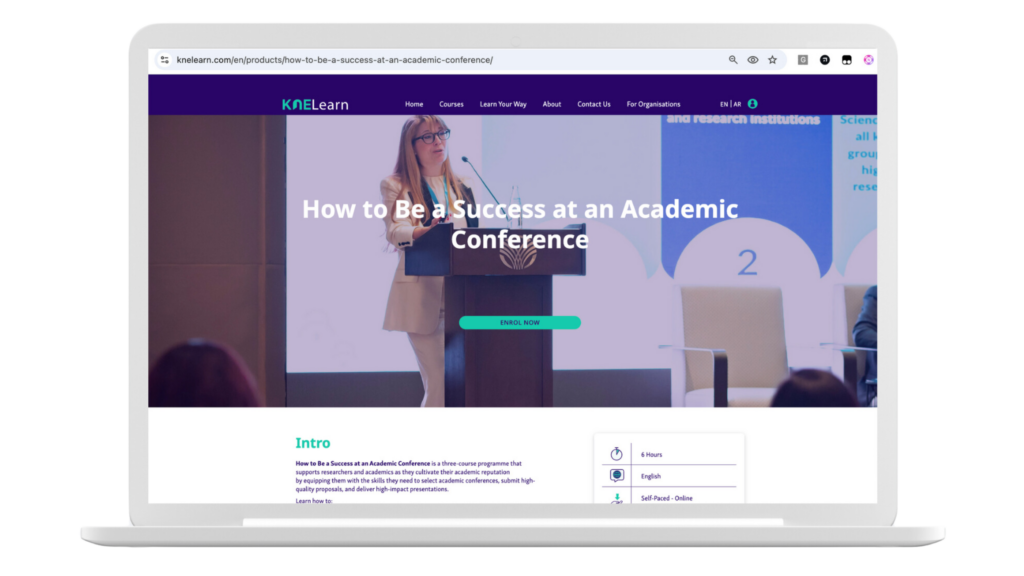
Amongst other things, the course covers Think.Check.Attend, an initiative launched by Knowledge E in 2017. This free tool helps researchers identify and avoid all the predatory conference organisers lurking in the academic ecosystem and waiting to pounce on the unwary.